Tag Archives: Boat

Tips For Choosing Boat Insurance

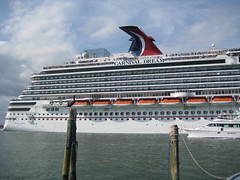
Cruise Ship
Image by King Brian

Tips For Choosing Boat Insurance

Unlike home or auto insurance, boat insurance policies can vary widely from one company to the next. So which type of boating insurance is best for you? Try these tips. They come from experts at the nation’s largest recreational boat owners association, BoatU.S.

• Know Thy Insurer-One way to find a good insurer is to ask friends who have had a claim in the past. Insurance companies may be good at taking monthly premiums, but how a company lives up to expectations when something goes wrong is a better indicator.

You can also research potential insurance carriers at www.am best.com/ratings. The ratings are the industry’s benchmark for assessing an insurer’s financial strength; look for an “A” rating (excellent) or better. State insurance regulatory agencies are also a good reference and can be found online.

• Homeowner’s or Separate Policy-Consider buying a separate insurance policy for the boat, rather than adding it to your homeowner’s policy, as the latter often limits certain marine-related risks such as salvage work, wreck removal, pollution or environmental damage. Whatever amount the boat is insured for, it should have a separate but equal amount of funds available for any salvage work. This means that you’re compensated for the loss of your boat and not having to pay additional, out-of-pocket costs to have a wreck removed from a waterway.

• Agreed Value vs. Actual Cash Value-These are the two main choices that boaters face and depreciation is what sets them apart. An “agreed value” policy covers the boat at whatever value you and your insurer agree upon. While it typically costs more up front, there is no depreciation if there is a total loss of the boat (some partial losses may be depreciated). “Actual cash value” policies, on the other hand, cost less up front but factor in depreciation and only pay up to the actual cash value at the time the boat is declared a total or partial loss or property was lost.

• Customize-Bass boaters may need fishing gear and tournament coverage as well as “cruising extensions” if they trailer their boat far from home. You may want “freeze coverage” if you live in a temperate state because, ironically, that’s where most of this kind of damage occurs. A good insurer will tailor your coverage to fit your needs so there will be no surprises.

Find your dream cruise at TopCruiseFinder.com.
Buying A Fishing Boat Is Easy And Affordable

Cruise Ship
Image by AnnaAM

Buying A Fishing Boat Is Easy And Affordable

Fishing from a boat is great fun for the whole family. It gives you access to those special fishing spots that can’t be reached by land. Best of all, once you own a boat, every weekend is a family vacation.

Many people are surprised by how affordable it is to buy a fishing boat. But with so many options available, choosing one that fits your needs and budget can seem a bit daunting. To help simplify the process, here are a few tips for first-time buyers from the experts at the Recreational Boating and Fishing Foundation (RBFF).

1. How will you use it? Although fishing may be your primary activity, are there other things your family might want to do, such as water-skiing or cruising? Consider how many people you’ll want to accommodate.

2. Where will you go? Do you plan to go on a lake, river or larger body of water, such as the Great Lakes or the ocean? If you plan to use your boat for overnight trips, look for one with a cabin, head and galley.

3. What’s your budget? In assessing costs, factor in operating expenses such as fuel and maintenance, as well as dry-stack storage or slip fees if you plan to dock at a marina. If it starts looking a bit pricey, don’t fret. A basic rowboat and trolling motor can be had for less than ,000. You can also save by trailering your boat and using it for day trips.

4. New or used? If your budget is tight, a used boat is a good alternative. If you go for a new one, make sure it is National Marine Manufacturers Association (NMMA) certified.

5. Financing. Boats can be financed for extended terms, which helps keep the monthly payment low. Get in touch with a National Marine Bankers Association (NMBA) lender, or visit DiscoverBoating.com for more tips and a handy loan calculator.

6. Test the waters. Before you buy, rent a boat from a local marina and go fishing for the day. It’s a great way to get the family hooked and helps you decide on the right boat for you.

Visit takemefishing.org for more boat-buying tips and information on where to fish in your area. The site also includes boat show and dealer listings. There’s even a section with information on blue book values to help you get the best deal on your boat.

Fishing from a boat is fun for the whole family.

Find your next cruise at TopCruiseFinder.com.

Tips on Buying a Boat

Cruise Ship
Image by MarcelMoreau

Tips on Buying a Boat

I discovered sailing many years ago and found it to be a wonderful way to enjoy time with friends and family as well as a way to get away from the office and become totally entranced and absorbed with a world that I did not know existed. I love to sail, so much that I became a certified American Sailing Association Sailing Instructor.
It has been 30 years now that I’ve sailed the Chesapeake Bay, East Coast U.S.A. and the Caribbean Islands and I’ve been fortunate to have owned a number sailing vessels, currently two Beneteau sail boats.
I’m often asked by my students what to look for when making an investment in a sailing vessel. I often share the following seven tips and hope that you too may find some value in them.
First carefully examine where you expect to use your boat, long term. Will it be on the Ocean, trans-Ocean, near the shore, in a Bay, on the Caribbean or all of the above. If you plan to sail Ocean or trans-Ocean then be sure that the construction is class “A” or rated for extended off shore passage making.
Beware of the buying philosophy “I’ll buy a smaller boat now and get a bigger one later.” If you’re buying new you will suffer two large depreciations. If buying used, the money you put into the first boat to bring it up to your own personal standards and needs will go a long way to paying a down payment or many monthly payments on the second boat. You will be upgrading the second boat anyway. Buy now what you expect to own for 5-10 years.
Take into account the area where you will be sailing and who you will be sailing with. Decide on the type of berths that will be suitable for you, your family and your guests. For example, aft doubles aligned with the axis of the boat or an aft double that runs across the boat port to starboard. Although the latter tends to be larger and more comfortable in the slip it is definitely not a sea going berth. How easily does the main salon table convert into a berth and is it sturdy enough to do so repeatedly? In a pinch or in good weather can any one sleep in the cockpit?
What is your likely cruising range? If just 2-4 days then water and diesel tankage can be respectively 20 and 80 gallons or less. If it is 5-10 days then a minimum would be 50 and 160. If you buy a boat with say 100 gallons diesel and 2-300 gallons water then the designer will have given up berth space to accommodate the tankage. Depending on the size of the boat the left over space may not be well utilized until you reach say a 50 ft. long boat. Look for living and storage space that is well utilized. Odd placement of the main salon settees, chart table and galley may indicate poor utilization of space and hence you may be paying good money for little advantage.
Boats that are heavy displacement, say 28,000 lbs for say a 42 ft. boat rather than say 17,800 lbs for a medium displacement, 42 footer will need 10- 15 knots of wind to develop any kind of “feel” at the helm and in many locations such as the Chesapeake Bay with winds typically 5 – 15 knots in the summer you may have purchased a very nice well equipped power boat. However these heavy displacement cruisers are excellent for extended off shore passage making and live-aboard sailing either in the Caribbean or the U.S.A..
One of the best tips, If you are a first time sailor and want to buy a boat in the 25 to 50 ft range, is to sail with someone who knows how to sail, take a sailing class and then charter a boat in the length range that interests you. Picking a boat with out sailing a boat of similar size is risky although many have done it successfully. Keep in mind that many of the modern designs of the last 10 years are designed specifically for two people to sail easily whether in the Bay or in the ocean.
Lastly, do insist on a survey. If the boat has any of the defects listed below find out the cost to correct them if you are expecting the boat to pass the insurer’s surveyor. Insurers have their own requirements. Your insurance agent and the surveyor should be working hand in hand. This is where a purchaser of a used watercraft can suddenly be faced with unexpected costs. Costly defects include but are not limited to:
Soft or cracked gellcoat on the deck.
Deck leaks around windows, masts, caprail, traveller or through deck fittings.
If the engine that has stood idle for more than 6 months diesel may be contaminated with bacterial sludges, have pistons seized, injectors blocked and electrical system contaminated with water. Insist on at least a 2-4 hour run in the water at cruising speed. Check for undue vibration, overheating, proper charging of the batteries and that the engine can come up to its cruising rpm.
If the boat is more than 6 years old have the surveyor check that the engine mounts are OK and particularly that all mounting bolts are intact. Two can be broken without any obvious signs or effects. When #3 breaks the engine is loose! This is a common problem on older boats that encounter rough waters while under power and can easily be overlooked by the surveyor.
Obviously you will need an out of the water inspection. Check for blisters, gellcoat cracks, soft spots, shaft play in the cutlass bearing and loose rudder bearings, hull integrity around through hulls and the gap between the hull and the top of the keel which should be filled with sealant else corrosion of the keel may have caused the keel to separate from the hull.
Rigging should be checked by a rigger and all running rigging must be overhauled end-to-end to detect hidden chafe.
Hope you find these tips helpful. Best wishes to you on your investment, maybe I’ll see you on the Chesapeake Bay or near the British Virgin Islands sometime, I’ll either be sailing on Majjik II or Majjik III.

Book your next cruise at TopCruiseFinder.com.